

If you’re an expat navigating the Mexican administrative system, you’ll likely come across CURP (Clave Única de Registro de Población) quickly. What is a CURP in Mexico? and Can a foreigner get a CURP? These are common questions we receive at Lorad Law. The answer is YES, and with our expert help through our residential visa services, you can get your CURP quickly and easily.
Wondering if you need a CURP? Take our quick test to find out if you’re required to have one as part of your residency in Mexico. It only takes a moment and could help you avoid unnecessary delays.
In this post, we’ll explain everything you need to know about CURP, including its meaning, how it works, and why you need it as an expat. We’ll also walk you through how to apply for your CURP, discuss the differences between CURP and RFC, and address common myths and mistakes.
Table of Contents
What is a CURP in Mexico?
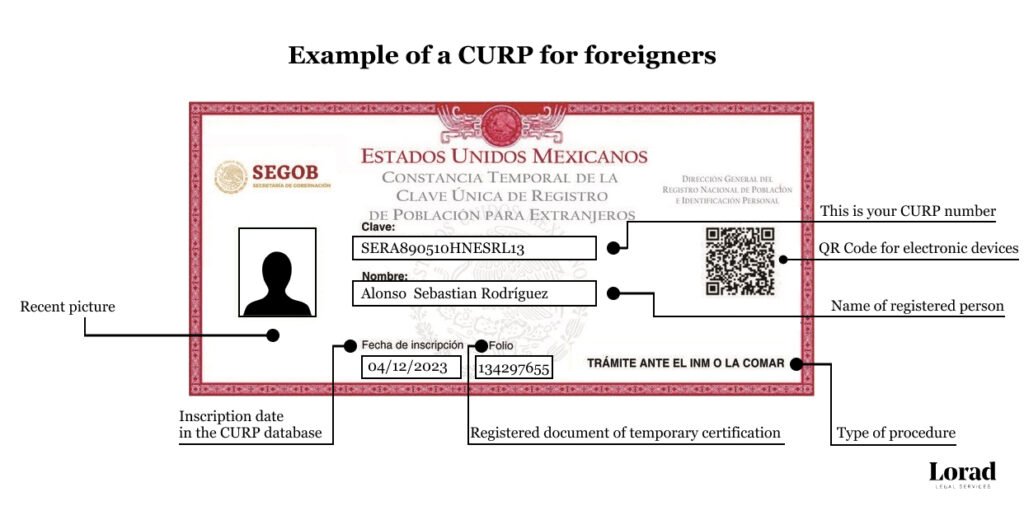
CURP stands for Clave Única de Registro de Población, which translates to Unique Population Registry Code. It’s an 18-character code that serves as a personal identification number for all residents in Mexico, including foreign nationals who have residency status.
The CURP is essential for accessing various public services and legal processes in Mexico. It includes personal details like your name, date of birth, nationality, and gender.
Quick history: Launched 1996, first went to President Zedillo for testing! Essential for expats—unlocks services, proves legal status. DOF source
Mexico CURP Number Example
A typical CURP number in Mexico looks like this: QTIK330917MNTVWE28.
The CURP is composed of:
- First four characters: Paternal surname, vowel, maternal surname, and first name.
- Six digits: Date of birth (YYMMDD).
- Gender: “M” for male and “F” for female.
- State code: Indicates the state of birth or residency status.
- Three letters: More consonants from the names.
- Final two digits: A homoclave (checksum for uniqueness).
Why Do I Need a CURP in Mexico?
As an expat in Mexico, the CURP is more than just a personal ID. It’s essential for accessing services and legal processes in the country.
Here’s why you need a CURP:
Healthcare
Without a CURP, you can’t access public healthcare through IMSS (Instituto Mexicano del Seguro Social). You will need your CURP to register for healthcare, which provides affordable medical care and social security benefits.
Employment
To work legally in Mexico, you need a CURP. Your employer will need it for payroll processing and tax reporting. It’s essential for job applications and signing contracts in Mexico.
Banking and Finance
If you want to open a bank account in Mexico or access other financial services (such as a loan or credit card), the CURP is required. It serves as a form of official identification for banks and other financial institutions.
Property Purchases
To buy property in Mexico, your CURP is required for registration with the public registry, and it is also needed for tax documentation. It’s an essential document for expats looking to invest in real estate in Mexico.
Public Services
Your CURP is required for a variety of services, such as signing long-term leases, enrolling children in schools, and accessing other social services in Mexico.
Online Services
In today’s digital age, your CURP is also necessary for accessing government portals, tax filing, and other online services that require identity verification.
By having a CURP, you gain access to almost every essential service in Mexico—making it a must-have for expats.
How to Get Your CURP for Foreigners in Mexico
Step-by-Step Process to Obtain a CURP
Obtaining a CURP is easier than you might think! Here’s how you can apply for yours:
Step 1: Gather Your Documents
Before applying for a CURP, ensure you have the following documents:
- Passport or official ID (for foreigners).
- Mexican residency card or visa.
- Proof of address in Mexico (e.g., utility bill).
Step 2: Go to the Registro Civil or RENAPO
Visit the Registro Civil (Civil Registry) or RENAPO (National Population Registry) office in Mexico. If you’re outside of Mexico, visit the nearest Mexican consulate to apply for your CURP.
Step 3: Submit Your Application
Fill out the CURP application form and submit your documents. The Registro Civil will verify your information and process your application.
Step 4: Receive Your CURP
Once processed, you will receive your CURP number. If you’re in Mexico, this will be done on the spot. If you’re applying from abroad, the consulate will mail it to you.
What Does a CURP Number Look Like for Foreigners?
The CURP for foreigners follows the same 18-character format as for Mexican nationals but with a slight variation for foreign-born individuals.
For example, in a CURP number like QTIK330917MNTVWE28:
- The “NT” code shows that the person was born abroad.
- The first four characters (e.g., QTIK) are derived from the individual’s name.
It’s essential to understand the structure of your CURP to ensure its accuracy for official use in Mexico.

Getting a CURP does not need to be a difficult process.
Contact our skilled lawyers and take a step forward towards living in Mexico.
Difference Between CURP and RFC
Many people confuse CURP with RFC (Registro Federal de Contribuyentes), but they are two different identification numbers used for different purposes.
| Feature | CURP | RFC |
|---|---|---|
| Purpose | Personal identification number for all residents, including foreign nationals with residency | Taxpayer identification number used primarily for taxation and business purposes |
| Length | 18 characters | 13 characters |
| Required for | Accessing public services, healthcare, and legal identification | Accessing public services, healthcare, and legal identification |
| Who needs it | All residents in Mexico (Mexican nationals and foreigners) | Anyone working or conducting business in Mexico |
| State code | Includes a state code or “NE” for foreigners | Not applicable |
| Gender indicator | Includes gender (M for male, F for female) | Not applicable |
| Format | 18 characters: name, birth date, gender, state code, and homoclave | 13 characters: initials, birth date, and homoclave |
| Where used | Healthcare, social security, public services, residency processes | Employment, invoicing, taxation, business registration |
Lorad handles CURP + RFC together.
Do I Need a Biometric CURP in 2026?
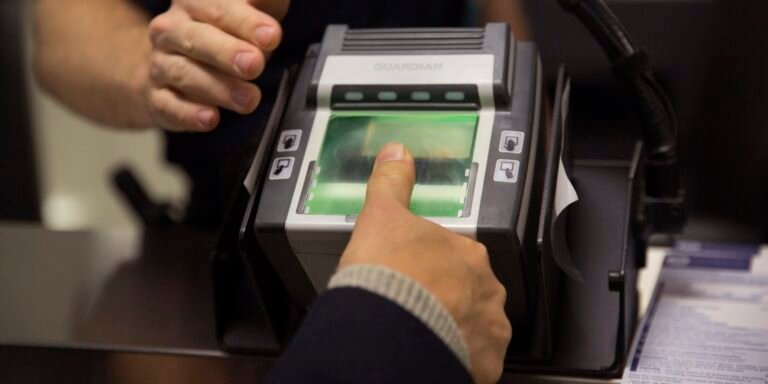
In 2026, Mexico will introduce biometric CURPs. This means your CURP will include fingerprints, facial recognition, and iris scans for added security. This will streamline identity verification processes, particularly for expats accessing services like banking and healthcare.
Foreign residents will benefit most from this change because the biometric CURP will prevent fraud and provide faster verification when dealing with government services.
💡 Find out all you need to know about the new biometric CURP in this post!
What does biometric mean? Unique physical traits (fingerprints, facial recognition) that can’t be forged—perfect for expat security.
Common Myths and Mistakes About CURP for Foreigners
Many expats are confused about the CURP process. Here are a few common myths and mistakes:
Do I need a CURP if I’m just living temporarily?
Even if you’re here temporarily, a CURP is required for various services like opening a bank account or accessing healthcare.
Can I get a CURP without a Mexican passport?
You don’t need a Mexican passport to get a CURP; you just need a valid residency card or visa.
Is the CURP only for Mexican citizens?
The CURP is mandatory for all residents in Mexico, whether Mexican or foreign. It’s essential for anyone with temporary or permanent residency.
Mistake #1: What happens if I don’t have the required documents?
Tip: Be sure to have your passport, residency card, and proof of address before applying for your CURP. Missing any of these can delay the process.
After reading, you understand CURP importance. Ready for yours? Take our quick test.
Conclusion about CURP in Mexico
CURP para extranjeros crucial for expat life. If you’re without one, contact our bilingual Mexican lawyers today.
Having CURP = gateway to enjoying Riviera Maya. Don’t hesitate—your Lorad CURP journey starts now. Cancun immigration lawyers handle your CURP application—no stress, perfect results.
Pingback: Codice unico del registro della popolazione - Wikipedia - zonasapiens
Pingback: What is a RFC in Mexico and how do I get one? - Lorad Law