
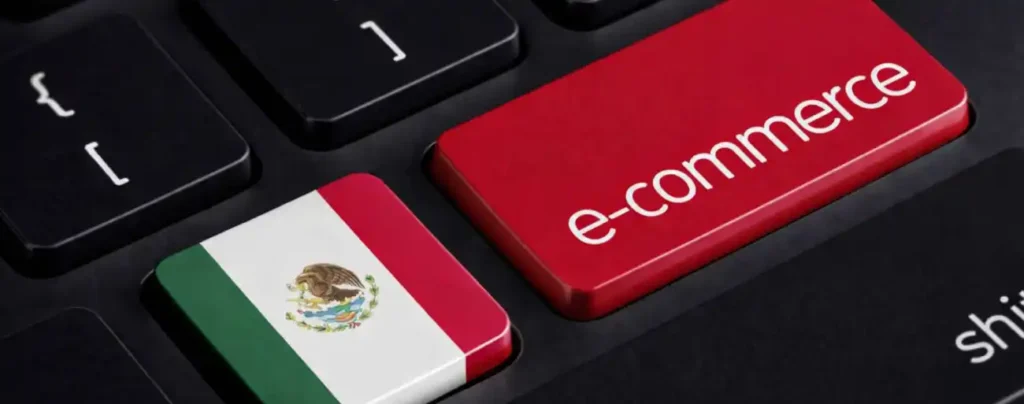
Mexico now ranks 8th globally in e-commerce penetration, according to the Estudio de Venta Online 2026 published by AMVO (Asociación Mexicana de Venta Online). In 2025, digital retail expanded 19.2%, pushing the total market to 941 billion pesos. E-commerce now accounts for 17.7 out of every 100 pesos spent in Mexican retail, surpassing the United States and Singapore. The number of Mexicans buying online reached 77.2 million last year, per the same AMVO report.
If you live in Mexico as an expat, this is your market. Not a market you are considering entering from abroad. One you already live inside, shop inside, and talk to customers inside every day. The American running a Playa del Carmen surf shop, the Canadian consultant working remotely from Mérida, the digital nomad selling handmade goods from Tulum: all of them have a 77-million-buyer domestic market at their fingertips. Most are not legally set up to reach it.
Starting an e-commerce business in Mexico as a foreigner without the right legal structure is one of the most common and costly mistakes expats make. This post walks through what you actually need: corporate structure, VAT, data protection, and consumer law.
Table of Contents
Why Mexico’s E-Commerce Growth Is Structurally Different
Mexico’s digital commerce is not growing in line with the broader economy. It is outpacing it dramatically. While Mexico’s GDP grew 0.8% in 2025, e-commerce retail grew 19.2%, a rate 25 times faster than the overall economy, according to AMVO. That gap matters. It means the legal and regulatory infrastructure is adapting under pressure, creating a moving target for businesses that try to enter without proper preparation.
Three forces are driving this shift. First, mobile internet penetration has brought tens of millions of first-time shoppers online in the last three years. Second, marketplace platforms have collapsed the barrier between browsing and buying across income levels. Third, Mexico’s position between the US and Latin America makes it a natural logistics and commerce bridge for North American businesses going digital.
For expats living in Mexico, this creates a specific opportunity: you already understand two markets. The one you came from and the one you live in. That cross-cultural perspective is a genuine commercial edge in a market that is still early in its digital maturity.
The result: a fast-growing consumer base, an evolving regulatory environment, and a compliance landscape that rewards early, well-structured market entry.
Which Mexican Business Entity Is Right for Your Online Operation?
Before a single transaction can be processed legally in Mexico, a foreign business needs to decide how it will operate. This is not a formality, and it is the question most expat entrepreneurs get wrong. The corporate structure you choose determines your tax obligations, liability exposure, and ability to scale.
The two most common entities for foreign operators are the S.A. de C.V. (Sociedad Anónima de Capital Variable) and the S. de R.L. de C.V. (Sociedad de Responsabilidad Limitada de Capital Variable). Here is how they compare:
| Feature | S.A. de C.V. | S. de R.L. de C.V. |
|---|---|---|
| Equivalent to | Corporation | Limited Liability Company |
| Number of partners | Unlimited shareholders | Maximum 50 partners |
| Liability protection | Yes | Yes |
| Administrative overhead | Higher | Lower |
| Structural flexibility | Less flexible | More flexible |
| Bank recognition | Widely recognised | Widely recognised |
| Best suited for | Scale, capital raising, institutional partners | Expat entrepreneurs, digital services, smaller operations |
| SAT registration required | Yes | Yes |
| Foreign 100% ownership | Yes (most sectors) | Yes (most sectors) |
Both entities require registration with the SAT and the Public Registry of Commerce. The choice between them depends on your ownership model, growth plans, and the nature of your digital operations.
For Foreign Investors: Getting Your Structure Right from Day One
Foreign nationals, including Americans, Canadians, and expats from any country, can own 100% of either entity in most commercial sectors, including e-commerce. However, certain restrictions apply depending on the industry. Getting your corporate structure right before you begin trading is the single most important legal decision you will make in Mexico. Our expat business consulting in Mexico post covers the practical steps in detail, and our formation team is ready to help you execute them.
IVA, ISR, and RFC: Mexico’s Tax Rules for Digital Sales
Mexico’s tax framework applies fully to digital transactions. Understanding your obligations before you begin selling is not optional. The SAT has significantly expanded its capacity to audit digital businesses in recent years.
There are three core tax obligations every e-commerce operator in Mexico must address.
Value Added Tax (IVA). As of April 2026, Mexico’s standard VAT rate is 16%. It applies to the sale of goods and most digital services. Foreign companies selling digital services to Mexican consumers (software, streaming, online platforms) must register with the SAT and collect IVA. This applies even without a physical presence in Mexico. The obligation has been enforced since 2020 and covers all cross-border digital services.
Income Tax (ISR). As of April 2026, corporate income tax in Mexico is levied at 30% on net profits. The applicable rate and structure depend on whether you operate through a Mexican entity, a branch, or as a foreign company selling cross-border. Each model carries different obligations and different levels of exposure to Mexican tax authority scrutiny. Expats running online businesses should also review their expat tax obligations in Mexico, particularly if they retain income or assets in the US or Canada simultaneously.
RFC Registration. Every business operating in Mexico must obtain an RFC (Registro Federal de Contribuyentes), the federal taxpayer identification number. Without it, you cannot issue invoices (facturas), open a business bank account, or operate legally. It is the starting point for all tax compliance in Mexico. See Lorad Law’s full checklist for RFC registration in Mexico to understand exactly what you need to prepare.
What PROFECO Expects from Every Online Store in Mexico
Mexico’s Federal Consumer Protection Law (Ley Federal de Protección al Consumidor) applies in full to e-commerce transactions. As of April 2026, the enforcement body is PROFECO (Federal Consumer Protection Agency), which has the authority to fine, suspend, and publicise non-compliant businesses.
For online sellers, the key obligations are practical and specific. Your website must display prices clearly and in Mexican pesos for sales to Mexican consumers. Your terms and conditions must be accessible before purchase. You must provide a minimum 5-business-day right of return for goods purchased online, Mexico’s equivalent of a cooling-off period. Refund policies must be stated explicitly and honoured.
These rules apply regardless of where your business is incorporated. Selling to a Mexican consumer from a US or Canadian company does not exempt you from PROFECO’s reach.
Your Privacy Notice Is Not Optional: Mexico’s Data Rules
Mexico’s data protection framework for the private sector is governed by the Federal Law on Protection of Personal Data Held by Private Parties (LFPDPPP). As of April 2026, enforcement authority sits with the Secretariat of Anti-Corruption and Good Governance (SABG), following the dissolution of the former regulator INAI in March 2025.
For e-commerce businesses, the practical obligations are clear. Publish a Privacy Notice (Aviso de Privacidad) before collecting any personal data. Specify the purposes for which data is used. Obtain consent where required. Honour ARCO rights: the right of consumers to access, rectify, cancel, or oppose use of their personal data.
Cross-border data transfers require either explicit consent or a data transfer agreement meeting Mexican legal standards. As of April 2026, fines for violations can reach up to 320,000 UMAs (approximately 40 million pesos) and are subject to change as implementing regulations are updated.
If you also serve EU consumers under GDPR, map Mexico’s requirements against your existing framework before launching. And if you are building a brand in Mexico, note that intellectual property protection is a separate but equally important layer to address before you start trading publicly.
Cross-Border E-Commerce: The Customs and Import Layer
If your e-commerce model involves physical goods shipped into Mexico (from the US, Asia, or elsewhere), customs compliance adds a further layer. Mexico’s Customs Law governs the import of goods. Thresholds and tariff structures for e-commerce shipments have evolved significantly as cross-border volumes have grown.
Low-value shipments may qualify for simplified customs treatment. This depends on the product category, declared value, and frequency of shipments. Businesses shipping regularly into Mexico should not structure operations around low-value exemptions. The SAT and customs authority have sharply increased scrutiny of this practice.
Marketplace operators, meaning businesses that facilitate third-party sales rather than selling directly, carry separate obligations under Mexican tax law. Platform liability for VAT collection on third-party sales is an active enforcement area.
What Smart Investors Are Asking Before Entering Mexico
Can a foreigner own 100% of a Mexican e-commerce company?
Yes, in most commercial sectors including retail e-commerce, digital services, and online platforms. Foreign Investment Law in Mexico allows full foreign ownership in these categories. Certain strategic sectors (media, transport, energy) carry restrictions, but standard digital commerce does not.
I am an expat living in Mexico. Can I run an online business from here legally?
Yes, and many do. Whether you are selling products to Mexican consumers, running a cross-border digital service, or operating a remote business from the Riviera Maya, the key is having the right legal structure in place. Operating informally as a foreign resident creates tax exposure and limits your ability to open business bank accounts, invoice clients properly, or scale. If you are still working out your residency status, see our post on Mexican residency for investors and founders. Getting that right first makes everything else simpler.
Do I need a physical presence in Mexico to sell online there?
Not necessarily. Foreign companies providing digital services to Mexican consumers are subject to Mexican IVA and must register with the SAT. However, selling physical goods typically requires either a Mexican entity or a reliable fulfilment and customs partner. The right structure depends on your product type and volume.
How long does it take to set up a company in Mexico?
With documents in order, most Mexican entities are registered within 4 to 8 weeks. The timeline turns on notary availability, SAT processing times, and how prepared your paperwork is. Starting without proper legal preparation almost always costs more time than the preparation itself would have taken.
What are the biggest legal mistakes foreign e-commerce businesses make in Mexico?
The three most common: operating without a properly registered Mexican entity, failing to register and collect IVA on digital services, and publishing a non-compliant Privacy Notice. Each carries enforcement risk, and all three are avoidable with proper legal setup.
Is Mexico’s legal framework stable enough for long-term investment?
Mexico’s commercial and tax legal framework is well-established and largely consistent with international standards. The areas of active evolution (data protection enforcement, digital VAT, marketplace liability) are the same areas being updated across most major markets. Staying compliant as rules evolve is a matter of ongoing legal monitoring, not structural risk.
The Bigger Picture: Mexico as a Digital Market Entry Point
Mexico’s position in the global top 10 for e-commerce penetration is not an accident. It reflects a consumer base that has moved online faster than the regulatory environment expected, and a legal framework that is actively catching up. For expats, foreign investors, and entrepreneurs living in or relocating to Mexico, that gap between market growth and regulatory maturity creates both opportunity and risk.
The opportunity: first-mover advantage in a market with 77 million online buyers, double-digit annual growth, and lower operational costs than comparable markets. The risk: entering without proper legal structure and finding that non-compliance is expensive to fix retroactively.
The expats and foreign businesses that succeed in Mexico’s digital economy will be those that enter correctly. Right corporate structure, right tax registrations, right compliance framework, all in place before the first transaction.
Start Your Mexico E-Commerce Operation the Right Way
At Lorad Law, we help expats, foreign entrepreneurs, and investors navigate Mexico’s legal framework from market entry through ongoing compliance. Whether you are an American living in Mexico ready to launch an online store, a foreign investor entering the market from abroad, or a digital nomad looking to formalise your operations, our bilingual lawyers ensure your digital business is built on solid legal foundations.
Don’t let a preventable legal gap slow your growth in one of the world’s fastest-moving digital markets.
Contact Lorad Law today and our team will help you enter Mexico’s e-commerce market correctly.